
Utility infrastructure is one of the most complex and risk-sensitive elements of any property development project. Electricity, gas and water connections all require coordination with network operators, approvals, technical designs and installation programmes.
When these services are delivered separately through multiple providers, the process can quickly become fragmented, increasing the risk of delays, cost overruns, and programme disruption.
For developers looking to improve project certainty, have clarity on cost, and effective project management, full lifecycle utility delivery through a multi-utility solutions provider offers a far more coordinated and commercially effective solution.
What Is Full Lifecycle Utility Delivery?
Full lifecycle utility delivery refers to the end-to-end management of utility infrastructure, from early feasibility assessments through to installation and network adoption.
Instead of engaging separate providers for electricity, gas and water infrastructure, developers work with a single utility partner responsible for coordinating the entire process.
This typically includes:
- Utility feasibility assessments
- Capacity and connection studies
- Network design and approvals
- Infrastructure installation
- Project coordination
- Network adoption through DNO, IDNO or water authorities
By managing all stages of utility delivery through a single partner, housing, commercial and public sector developers gain greater visibility, coordination and control over infrastructure delivery.
The Risks of Managing Utilities Through Multiple Providers
Traditional utility delivery often involves working with a number of different organisations, including:
- Distribution Network Owner (DNOs)
- Water authorities
- Independent Distribution Network Owners (IDNOs)
- Independent Connection Providers (ICPs)
- Utility design consultants
- Civil engineering contractors
While each organisation plays an important role, managing multiple providers across a single development can introduce several challenges.
Programme Delays
Each utility provider operates with its own processes, approval timelines and installation schedules. When these services are delivered independently, delays in one area can quickly impact the overall development programme.
For example, electricity network approvals may delay trenching works, which can then impact the installation of gas and water infrastructure.
Communication Complexity
Managing several utility providers also increases the number of stakeholders involved in infrastructure delivery.
This can create communication gaps between contractors, consultants and network operators, making it more difficult to maintain project momentum.
Unexpected Cost Risks
Infrastructure costs can sometimes change during a project due to:
• Network reinforcement requirements
• Capacity constraints
• Design changes
• Additional installation requirements
Without early coordination between utility providers, these factors can introduce commercial uncertainty for developers.
How Multi-Utility Delivery Reduces Development Risk
Labour’s reinforced pledge to build 1.5 million homes by 2029 is an ambitious yet necessary step toward resolving the UK’s housing crisis. By focusing on affordability, sustainability, and infrastructure development, the plan aims to create a fairer, more secure housing market. However, successful execution will depend on overcoming planning, funding, and workforce challenges.
As the country moves toward the next general election, housing will undoubtedly remain a key issue for voters. The question remains: Can Labour deliver on its promise and transform the housing landscape for the better?
Single Point of Contact
One of the key advantages of full lifecycle delivery is having a single point of contact responsible for managing the entire utility infrastructure programme.
This simplifies communication and ensures that all utility services are aligned with the wider development schedule.
Better Programme Coordination
Multi-utility providers coordinate the design, approval and installation of different utility networks to ensure that works are delivered efficiently and in the correct sequence.
This approach can help reduce delays caused by misaligned installation schedules or approval processes.
Shared Infrastructure Opportunities
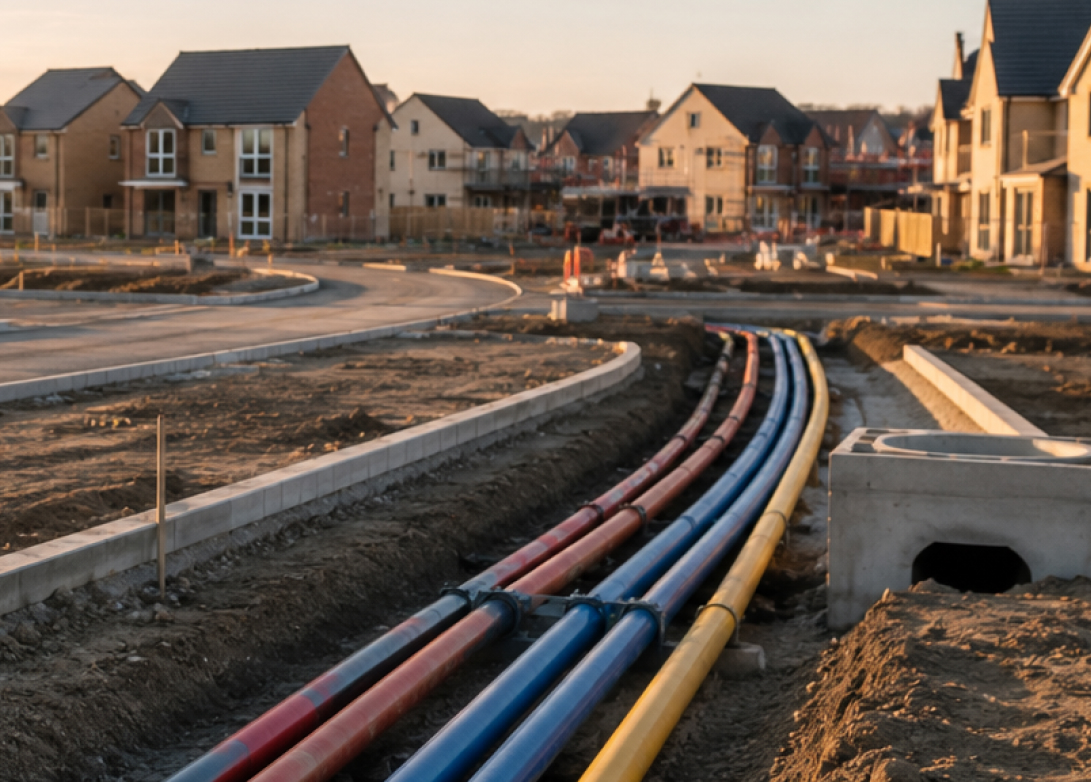
When electricity, gas and water networks are planned together, there may be opportunities to install services more efficiently.
This can include:
• Shared trenching
• Coordinated excavation works
• Reduced disruption across the development site
These efficiencies can help improve installation timelines while minimising ground disturbance.
Earlier Identification of Network Constraints
Capacity constraints or reinforcement requirements can sometimes impact infrastructure delivery.
A coordinated utility delivery approach allows these challenges to be identified earlier in the planning process, giving developers greater visibility and time to plan solutions.
Why Early Utility Planning Is Critical for Development Projects
Utility infrastructure should never be treated as a late-stage consideration once construction begins.
Instead, engaging with a utility partner early in the development lifecycle allows infrastructure planning to take place alongside the wider project programme.
Early planning can help developers:
• Understand network capacity requirements
• Identify potential reinforcement needs
• Plan infrastructure layouts efficiently
• Improve overall programme visibility
For larger residential or mixed-use developments in particular, early infrastructure planning can significantly reduce project risk.
A Smarter Approach to Utility Infrastructure Delivery
As development projects grow in scale and complexity, infrastructure planning becomes increasingly important.
Full lifecycle utility delivery offers developers a more coordinated way to manage electricity, gas and water connections while reducing the risks associated with fragmented infrastructure delivery.
By working with a multi-utility infrastructure partner, developers benefit from:
• Greater programme certainty
• Simplified project coordination
• Earlier identification of infrastructure challenges
• More efficient installation programmes
Ultimately, this approach allows developers to focus on delivering their projects while ensuring that essential infrastructure is delivered effectively and on schedule.
If you are planning a development and want to simplify your utility infrastructure delivery, speak with the team at CSG Utilities to discuss your project requirements.