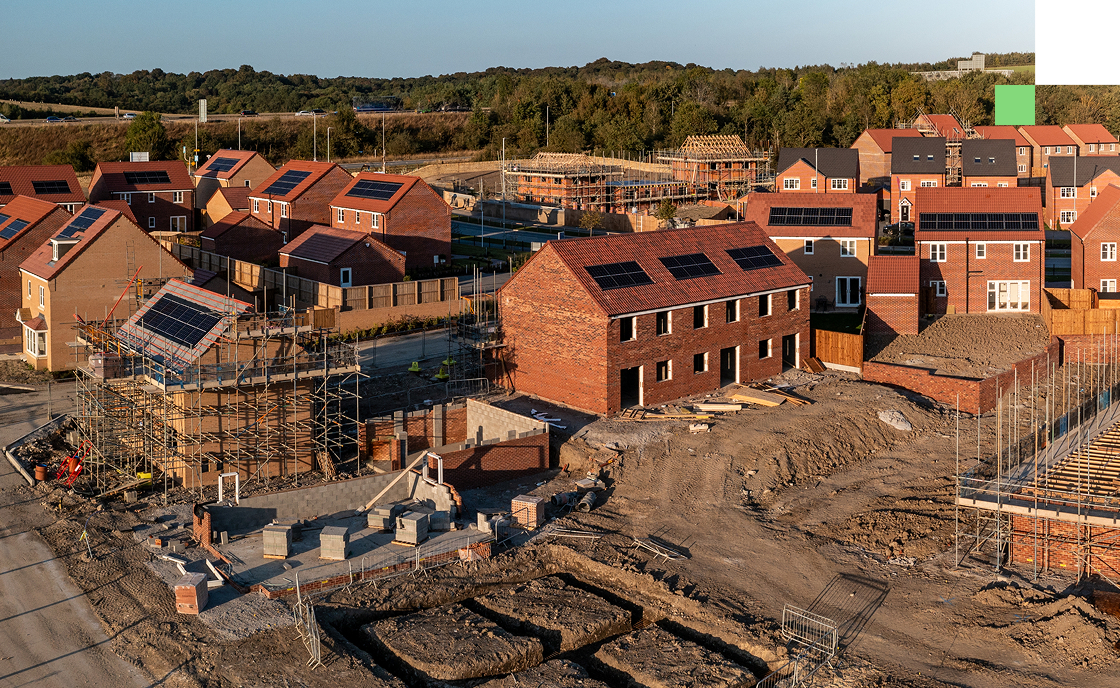
The way we build and power new homes in England is changing.
With the Future Homes Standard set to introduce more demanding energy efficiency requirements for new build properties, developers need to think carefully about how their developments will be powered, heated and connected.
While much of the conversation has focussed on low-carbon heating and improved energy efficiency, there’s another important consideration: electricity infrastructure.
As new homes become increasingly reliant on electricity, ensuring developments have the right connections and network capacity in place will be essential.
So, what does the Future Homes Standard mean for electricity connections, and what should developers be considering?
What is the Future Homes Standard?
The Future Homes Standard is part of the UK Government’s wider commitment to reducing carbon emissions from buildings.
It introduces changes to building regulations in England, designed to ensure new homes are more energy efficient and produce significantly fewer carbon emissions than homes built to previous standards.
A key part of this transition is moving away from traditional fossil fuel heating systems towards low-carbon alternatives, such as heat pumps.
Alongside improved building fabric and greater energy efficiency, these changes will influence how electricity is used across residential developments.
And that has important implications for developers planning new sites.
Why Will Electricity Connections Become More Important?
Traditionally, residential developments have relied on a combination of gas and electricity to meet household energy needs.
However, as new homes transition towards electric heating and other low-carbon technologies, electricity networks will play an increasingly important role.
For developers, this brings several considerations.
1. Increased Electricity Demand
Heat pumps, electric vehicle charging and other electrical technologies can increase the demand placed on local electricity networks.
While individual technologies are becoming more efficient, developers still need to understand the combined electrical requirements of their developments.
A site designed around traditional electricity usage assumptions may not have the capacity needed to support its future requirements.
What this means for developers: Electricity demand should be assessed early, taking into account the technologies likely to be installed across the development.
2. Network Capacity and Connection Availability
As demand for electricity grows, the capacity available on local distribution networks becomes an increasingly important consideration.
Depending on the location and scale of a development, additional infrastructure or network reinforcement may be required to accommodate the anticipated electrical load.
These requirements can influence connection costs, delivery programmes and overall development feasibility.
What this means for developers: Engaging with utility specialists during the early planning stages can help identify potential capacity constraints and establish a suitable connection strategy.
3. Planning for Low-Carbon Technologies
The Future Homes Standard is part of a wider transition towards more sustainable housing.
Technologies such as heat pumps, solar photovoltaic (PV) systems, battery storage and electric vehicle charging are becoming increasingly relevant to residential development.
Not all these technologies are mandated by the Future Homes Standard itself, but they can influence how a development’s electrical infrastructure needs to be designed.
Developers should consider both the immediate requirements of a site and how those requirements could evolve over time.
What this means for developers: A coordinated approach to electrical infrastructure can help ensure connections are designed around the development’s anticipated energy needs.
4. Earlier Utility Planning
Electricity connections have always been an important part of residential development, but the shift towards electrification makes early planning even more valuable.
Leaving utility infrastructure considerations until later in the development process can create avoidable challenges, particularly where additional network capacity or infrastructure is required.
Early engagement can help developers understand connection options, identify potential constraints and coordinate electricity infrastructure with the wider construction programme.
What this means for developers: Bringing utility planning into the development process early can help reduce uncertainty and support more efficient project delivery.
What Should Developers Be Doing Now?
Preparing for the Future Homes Standard isn’t simply about meeting new building regulations. It’s also about understanding how changing energy requirements could affect the infrastructure supporting a development.
For developers planning new residential schemes, several practical steps are worth considering:
- Review anticipated electricity demand: Consider the combined impact of heating systems, EV charging and other electrical technologies.
- Assess network capacity early: Understand whether the existing electricity network can accommodate the development’s requirements.
- Consider future infrastructure needs: Explore how electrical demand may change as technologies and household requirements evolve.
- Coordinate utility planning: Ensure electricity infrastructure is considered alongside the wider development design and construction programme.
- Engage with utility specialists: Seek advice early to help identify potential connection challenges and establish a clear delivery strategy.
Taking these steps can help developers make informed decisions before infrastructure requirements begin affecting project costs or timescales.
Supporting Developers Through Changing Energy Requirements
As building standards evolve, so too must the infrastructure that supports new developments.
At CSG Utilities, we understand the importance of planning and delivering utility connections that meet the requirements of modern residential developments.
From early-stage utility planning and coordination through to connection delivery, we work with developers to help navigate infrastructure requirements and keep projects moving.
With the Future Homes Standard bringing greater attention to how new homes are powered, taking a proactive approach to electricity connections is an important part of preparing for the future.
Planning a residential development?
Speak to the CSG Utilities team about your electricity connection requirements and how early utility planning can support your next project.