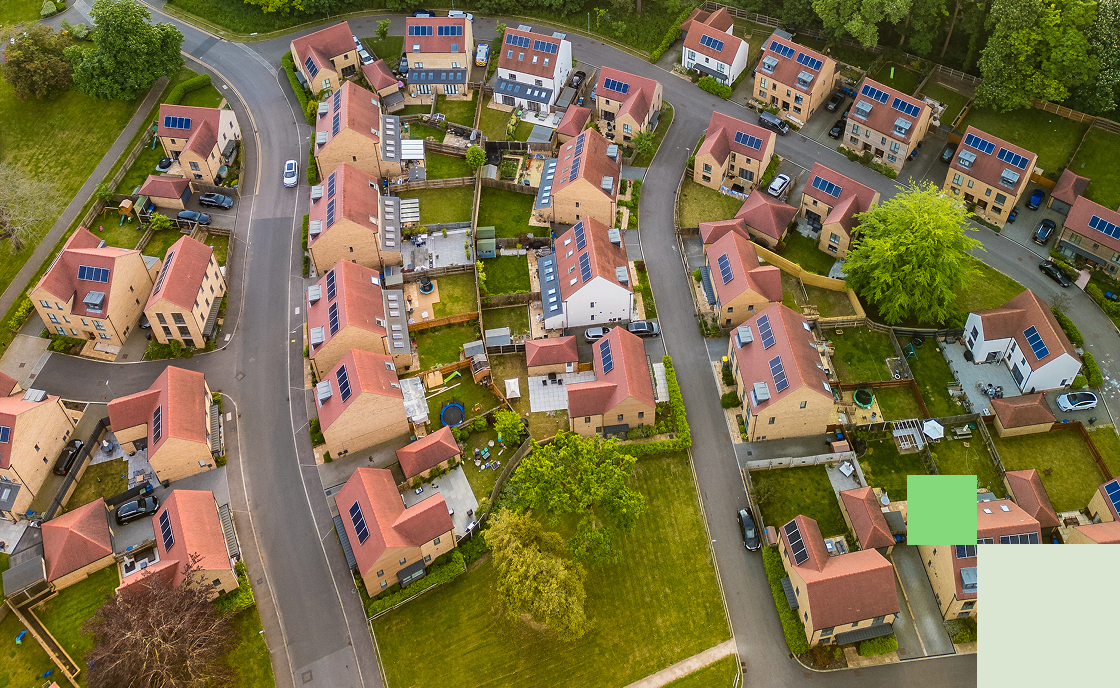

The way new homes are designed, heated and powered is changing.
From 24 March 2027, the Future Homes and Buildings Standards will introduce new requirements for most new homes in England, with the aim of delivering highly energy-efficient buildings with low-carbon heating and on-site renewable electricity generation.
For developers, however, the implications extend beyond building fabric and heating technology.
As new developments become increasingly reliant on electricity, understanding their electrical requirements, and the capacity of the network serving them, becomes an increasingly important part of early project planning.
So, what is changing, and what should developers be considering now?
What is the Future Homes Standard?
The Future Homes Standard forms part of changes to the Building Regulations designed to improve the energy performance of new homes and support the transition towards lower-carbon buildings.
The Government published the final technical specification for the Future Homes and Buildings Standards on 24 March 2026.
For most building work in England, the new regulations come into force on 24 March 2027, while different arrangements apply to higher-risk building work.
The Government says the standards are intended to ensure that new homes and non-domestic buildings have low-carbon heating and high levels of energy efficiency, so they should not need to be retrofitted to become zero-carbon in use as the electricity grid decarbonises.
For developers, several changes are particularly important.
1. New homes will move away from fossil-fuel heating
One of the most significant changes is the move towards low-carbon heating.
New homes will need to use low-carbon heating solutions, such as heat pumps or heat networks, alongside high levels of energy efficiency. The Government has confirmed that gas boilers will not meet the required performance standard.
That means heating becomes increasingly intertwined with electrical infrastructure.
A development that previously relied on gas for a significant proportion of its heating and hot-water demand may instead place more demand on its electrical connection.
For developers, understanding that demand early will be important when determining the electrical requirements of a site.
2. Energy efficiency requirements are increasing
The Future Homes Standard isn’t simply about changing the technology used to heat a home.
The updated Part L requirements have the dual aims of reducing greenhouse gas emissions and conserving energy, with new Approved Documents providing the technical guidance developers and designers will use to demonstrate compliance.
This places energy performance firmly within the wider design process.
Heating systems, controls, insulation, ventilation and energy generation all need to be considered as part of an integrated approach rather than as separate decisions made later in a development.
3. On-site renewable electricity generation becomes a requirement
Another significant change is the introduction of a new Requirement L3, which requires on-site renewable electricity generation for new dwellings and buildings containing dwellings.
For many developments, this is expected to mean solar PV. Government guidance states that solar panels will be included on the majority of new homes.
The detailed requirements are more nuanced than simply saying every new home must have the same number of solar panels. The regulations take account of factors including the site, available infrastructure and what can reasonably be accommodated.
Government guidance also makes clear that the sizing of on-site generation needs to consider factors including on-site energy demand, available infrastructure and any export limits set by the Distribution Network Operator (DNO).
That makes renewable generation another consideration that developers may need to factor into conversations around electrical infrastructure and network capacity.
What does this mean for electricity demand?
This is where the Future Homes Standard becomes particularly relevant from a utilities perspective.
A new development may need to accommodate electricity requirements associated with:
- Low-carbon heating and hot water
- Electric vehicle charging
- Solar PV and electricity generation
- Wider household electrical demand
Taken together, these factors can change the electrical profile of a development.
The important question therefore isn’t simply:
“How many homes are we connecting?”
It is also:
“What will those homes require from the electricity network?”
That distinction can become increasingly important when planning a connection.
Why grid capacity should be considered early
The transition towards more highly electrified homes makes early consideration of electricity infrastructure increasingly important.
Network capacity isn’t unlimited, and the connection available for a proposed development will depend on the circumstances of the site and the surrounding electricity network.
If additional capacity, network reinforcement or alternative connection arrangements are required, discovering this later in the programme can create additional complexity.
Early utility planning can instead give project teams greater visibility of potential constraints while there is still time to respond to them.
That could mean reviewing load requirements, engaging with the relevant DNO or IDNO, considering connection options or ensuring infrastructure requirements are reflected in the wider site design.
For developers, the key message is simple:
Utility infrastructure should be considered alongside the development not after it.
What about developments already in progress?
The introduction of the new standards does not mean every development automatically moves to the new requirements on 24 March 2027.
There are transitional arrangements.
For most relevant building work, earlier requirements can continue to apply where the necessary building notice, initial notice or full plans were submitted before 24 March 2027, provided work on that building starts before 24 March 2028. Different transitional arrangements apply to higher-risk buildings.
Developers with projects spanning the transition should therefore establish which regulatory requirements apply to each development rather than assuming that the March 2027 date tells the whole story.
What should developers be doing now?
With the standards coming into force in March 2027, now is the time to start considering their implications for developments in the pipeline.
From a utilities perspective, that means thinking about electrical infrastructure as early as possible.
Developers should be considering expected electrical demand, proposed heating technologies, renewable generation, EV charging requirements, available network capacity and when power will be required throughout the development programme.
It also means bringing the relevant teams together.
Architects, M&E consultants, energy specialists, utility providers and network operators may all have a role to play in ensuring that the building design and infrastructure strategy work together.
Preparing the infrastructure for the homes of the future
The Future Homes Standard represents an important shift in the way new homes in England will be designed and powered.
But delivering lower-carbon, increasingly electrified homes requires more than changes inside the property.
The homes of the future need the infrastructure to support them.
At CSG Utilities, we help developers understand their utility requirements, assess connection options and coordinate with network operators to support projects from early planning through to delivery.
If you’re planning a new development and want to understand what changing electricity requirements could mean for your utility strategy, get in touch with CSG Utilities and start the conversation early.